Bathrooms
How long does a bathroom remodel take in Pasadena?
By Michael Ward, owner of MKW Homes Inc
By Michael Ward, owner of MKW Homes Inc · Updated September 2026
The short answer
A full gut bathroom remodel that keeps its layout will usually take a few weeks of work on site. The calendar from first meeting to first shower runs longer, because design, ordering, plan check, and inspections sit around the construction. What stretches it is rarely the tile: it is late orders, inspection dates, what demolition finds in an older house, and glass that can only be measured after tile.
What has to happen before demolition day?
Nearly every decision has to be made, and most of the ordering done. A bathroom is one small room, so the trades work in it one after another, and a missing part stops everyone behind it. Before demolition we want the layout fixed, every fixture chosen, and the long lead items in hand or confirmed with a ship date. A custom vanity, special order tile, and a valve in an uncommon finish tend to be the slowest to arrive.
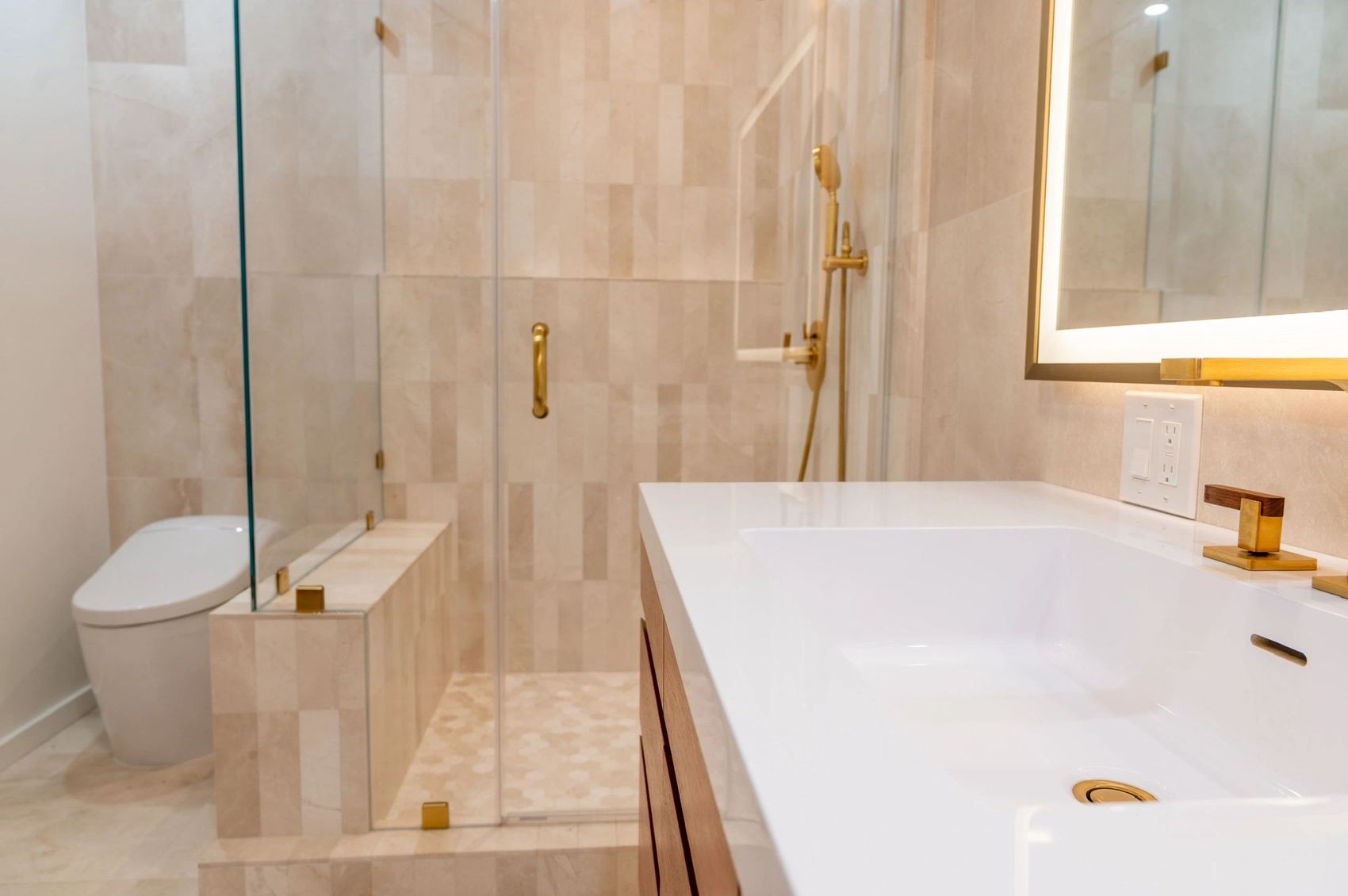
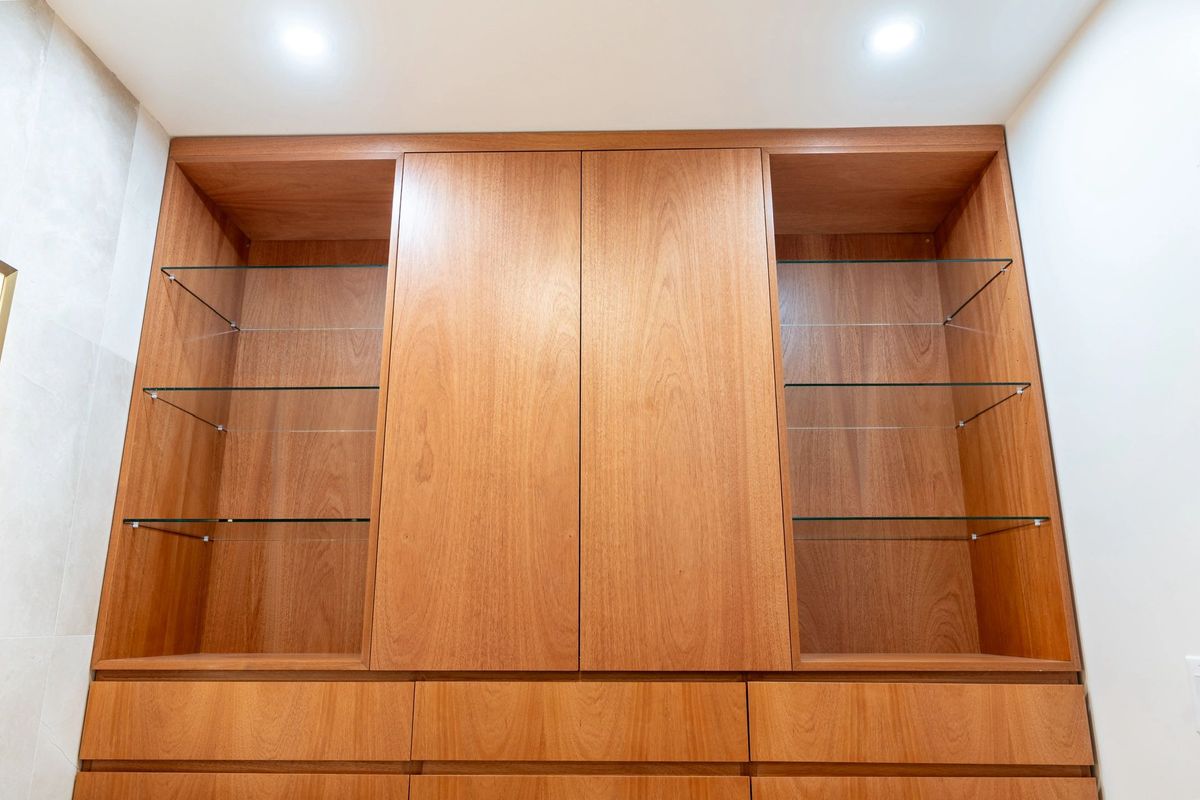
Selections decide the rough-in, not just the finish. On our Primary Bathroom Remodel, the backlit mirror and the recessed glass shelving were wired before the board went on, so both had been chosen, sized, and placed before a single wall closed. The same logic runs through everything on this list, which we want settled before the first tile comes off the wall.
- The shower valve, because its body goes into the wall at rough-in.
- The vanity, since its drain and supply heights set where the pipes come through.
- The toilet, since its rough-in distance sets where the drain flange goes.
- Every tile, with spare for cuts and breakage, checked for matching lot numbers.
- Mirror, lighting, and fan locations, since the wiring runs before any board goes up.
- The niche size, so it can be framed to land on full tiles.
Once work starts, what order do the phases follow?
The bathroom remodel phases run in a fixed order, because each step covers up the one before it, and anything covered too early has to be torn open again to be fixed or inspected. Demolition is loud and quick. The slow stretches are the quiet ones: a pan holding water until the inspector sees it, mortar and grout curing, a glass shop cutting panels.
A realistic bathroom renovation schedule shows those waits as line items from the start, so nobody mistakes an empty day for a stalled job. For a full gut that keeps its layout, the order runs like this.
- Demolition to the studs and subfloor, with the route through the house protected.
- Framing repairs, rough plumbing, and rough electrical, then the rough inspection.
- Wall board or a floated base, the shower pan, and the pan's water test.
- Tile and grout, with a cure period after each.
- Vanity, top, toilet, valve trim, lights, and mirror.
- Glass measured and installed, the final inspection, and a punch list.
How long does demolition take in an older Pasadena bathroom?
The tear-out itself is usually a day or two, longer when the old tile sits in a thick mortar bed over wire lath, as it often does in pre-war bathrooms. That mortar comes out in heavy slabs, carried out by hand. Testing comes first. Paint in a house built before 1978 is treated as lead until tested, and old vinyl floor tile, its adhesive, and older plaster get sampled for asbestos; if a sample comes back positive, a specialist removes that material before demolition goes on.
What demolition exposes matters more to the schedule than the demolition itself. Under old tubs and toilets we expect subfloor softened by years of slow leaks, and sometimes a joist that needs sistering. Behind the walls, galvanized supply pipe narrowed by rust and cast iron drain worn thin along its bottom are common finds in a San Gabriel Valley bathroom remodel on a pre-war house. Where there is a crawl space, looking at the underside of the bathroom floor before demolition catches much of this early.
Each find costs time in one of three ways. One that needs only a decision costs hours, if you can be reached. One that needs a part costs as long as the part takes to arrive. One that needs structural repair has to be seen at the rough inspection along with everything else. Agreeing up front how likely fixes get priced and approved keeps the first kind short; having common repair materials on hand shrinks the second.
Does moving the toilet or shower add time?
Yes. Reconnecting a fixture to the pipes already under it is quick; building a new drain, vent, and supply run to a new spot takes the plumber days rather than hours, and the rest of the room waits on it. Where a new drain has to cross the floor joists instead of running between them, more of the floor comes up to find a route that keeps its fall, and the inspector has to see all of it before the floor closes.
The vent is what spreads the work beyond the bathroom. A fixture that moves too far from its old vent needs a new one, run up inside a wall and out through the roof or tied into an existing vent higher up, and that path can cross the attic or the room next door. In a pre-war house, every wall opened outside the bathroom is a plaster patch and a repaint. Ask for the schedule both ways, with and without the move, before you decide.
Why do inspections set the pace?
Because work the inspector has to see stops until the inspector has seen it. A permitted bathroom usually gets at least three visits: the rough inspection of framing, plumbing, and electrical while the walls are open, the shower pan inspection before tile, and a final. Nothing can be covered in between, which makes inspections the one part of a bathroom remodel timeline in Pasadena that the crew does not control.
The pan test shapes the middle of the job. The drain is plugged, the pan is flooded, and the water level has to hold until the inspector checks it; only then does tile go down. We book each inspection for the day the work will be ready, not after it is finished, which saves days across a job. Pasadena, South Pasadena, and Arcadia each run their own inspection calendars, so the wait for an open slot varies from city to city.
Two things on your side help. Make sure someone can let the inspector in on the scheduled day, and keep the permit paperwork and approved drawings on site. A missed or failed inspection does not cost the hour it took; it costs the wait for the next open slot.
Why does tile take up so much of the schedule?
Because most tile work is preparation and curing, not setting tile. In a pre-war house the walls are often out of flat, so they are straightened first. Then the waterproofing goes on, the layout is worked out, and the setting bed has to cure before grout, and the grout before water. Rushing any of those shows up later as cracked grout or a hollow tile.
Tile installation time follows the number of cuts, corners, and changes of plane, not the square footage. A niche adds a back, two sides, a top, and a sill, all cut and waterproofed. Small mosaic on a shower floor means cuts around the drain and far more grout joints to fill and clean. Large format tile is slow for other reasons: each piece is heavy, back buttered for full coverage, and leveled against its neighbors.
On our Primary Bathroom Remodel, large format travertine runs floor to ceiling. Every wall was floated flat first, because at that size one bowed stud shows in every joint, and the tile was dry laid before any of it was set so the pattern lands on full tiles at the niche and the corners. Both steps happen before the first tile goes on a wall, and both are why the room reads as planned.
When does the glass door go in, and why so late?
Near the very end, because frameless glass is made to measurements taken off the finished tile. Panels are cut and drilled to size before they are tempered, and tempered glass cannot be trimmed afterward, so measuring waits until the tile is set, grouted, and every surface the glass touches is final. On our Primary Bathroom Remodel, the shower was glazed after the tile so the panels sit tight to the finished surface.
That leaves a gap between the last tile and the door while the shop makes the glass, and its length depends on the fabricator and the hardware. Many households bridge it with a tension rod and a curtain once the valve trim is in. If the bathroom has to be finished for a date, count backward from the glass, not from the tile.
Can you live with your only bathroom torn out?
Yes, but decide where each daily need will happen before the tear-out, because for most of the job that room has no toilet, no sink, and no shower. Bathing moves to family, a neighbor, or a gym, and the kitchen sink covers teeth and hands. The toilet is the hard one; ask whether it can be reset each evening during the stretches when the floor is not open.
The order can also bend in your favor. When it is the only bathroom, the toilet and sink can go back as soon as the floor tile is set and cured, ahead of the mirror and the glass. Expect the whole house to lose water for part of a day when the plumber ties in new lines. In older Pasadena houses the main shutoff is sometimes an old valve that no longer closes fully, which is better found on the walkthrough than on tie-in day.
What makes a bathroom remodel take longer than planned?
Waiting, far more than working. Almost every delay we see is time spent waiting on a part, a decision, an inspector, or a crew. A crew rotating among several jobs leaves your bathroom idle between visits. Our one four-person crew works a single job at a time. When an inspection passes, the next phase starts when the room is ready, not when a crew frees up.
Ask any bathroom contractor in Pasadena who will be in your house each day and what else they are building that month. Most of the other delays are set up before demolition, which is why they can be avoided. These are the usual ones.
- A layout change after demolition, which sends the plumber and the inspector back a step.
- Damage found behind a wall with nobody ready to approve the repair.
- A failed rough inspection or pan test, which means a correction and a new date.
- Tile that arrives short, chipped, or in a different shade from the sample.
- Glass measured before the tile is finished, then made again.
The one thing to remember
A bathroom remodel runs long on the calendar when decisions and deliveries lag behind the crew, not because the work is slow. Settle every selection and get the long lead items in hand before demolition, answer each find the day it turns up, and the weeks on site will run close to the plan.
Follow-up questionsAnswered.
Can a bathroom be remodeled in a week?
A cosmetic refresh can come close: a new vanity, toilet, lighting, and paint, with the plumbing left where it is. A full gut with a tiled shower cannot, because the steps that take calendar time are not labor. Mortar and grout have to cure, inspections have to be booked, and the glass cannot be measured until the tile is done. Putting more workers in a small room does not shorten any of those.
How long does a half bath take compared with a full bathroom?
A half bath, with a toilet and a sink and no shower, is a much shorter job. It skips the waterproofing, the pan inspection, and the glass, which are the steps that stretch a full bathroom. The usual limits are the vanity's delivery date and the floor: an old floor that is out of level, or old vinyl that tests positive for asbestos, adds its own step before new tile.
Does a Pasadena permit add weeks to a bathroom remodel?
Mostly before work starts. A bathroom that keeps its layout may need little plan review, while moving walls or fixtures can mean drawings are checked before the permit is issued. Ask the city's Building & Safety counter what your scope needs and apply early, so the bathroom remodel permit in Pasadena is in hand before demolition. Interior bath work is usually exempt from landmark design review, but confirm your property's status with the planning counter.
How soon can the new shower be used after tile and grout?
As soon as the slowest product in the shower says so. The setting material, the grout, the caulk at the corners, and any stone sealer each carry a cure time on the label, and the longest one sets the date. Cement-based products cure more slowly in cold weather, so a winter job can need longer. Running water over grout that has not hardened can wash out color and weaken the joints.
Is there a best time of year to start a bathroom remodel?
Not for the work itself, since a bathroom is interior and Pasadena weather rarely stops it. Two things are seasonal. If a new fan duct or plumbing vent has to go through the roof, that opening is best made in dry weather, and most rain here falls between roughly November and March. City offices and suppliers also close for holidays, so a job running through late December has fewer working days than the calendar shows.
Is it faster to remodel two bathrooms together?
Yes, and the total calendar is usually shorter than doing them one after the other, because the crew can work in one room while the other waits on a cure time or an inspection. The trade-off is living with neither. With only two bathrooms, it usually makes sense to do them in sequence and keep one working; a house with a third toilet can often manage both at once.
Related services

Free estimatesWant a straight answer on your project?
About the author
Michael Ward, owner of MKW Homes Inc
Michael is a Liverpool-trained builder with over 20 years in the trade, running one four-person crew across Pasadena and the San Gabriel Valley. California license CSLB #1074934, verifiable on the CSLB website. He writes these guides from what the work actually involves.