Turf & outdoor
Artificial turf or drought-tolerant landscaping: which is better?
By Michael Ward, owner of MKW Homes Inc
By Michael Ward, owner of MKW Homes Inc · Updated September 2026
The short answer
Choose by use: artificial turf where kids or dogs need a surface to play, drought tolerant landscaping for ground you mostly look at. Planting runs cooler in a Pasadena summer, supports pollinators, and gets fuller with age, while turf slowly wears. Once plants are established, the water difference is small. Many of the best yards use both, with turf sized to the play area and planting everywhere else.
How do you decide between turf and planting?
By asking who walks on it, and how often. Turf is a surface: it takes a game of catch, a dog's laps, and a folding table for a party, and it stays flat and green doing it. Planting is something you look at and walk through on a path, and it will not survive a soccer ball every afternoon. When we walk a yard, we sort it by that question, patch by patch, before anyone talks about materials.
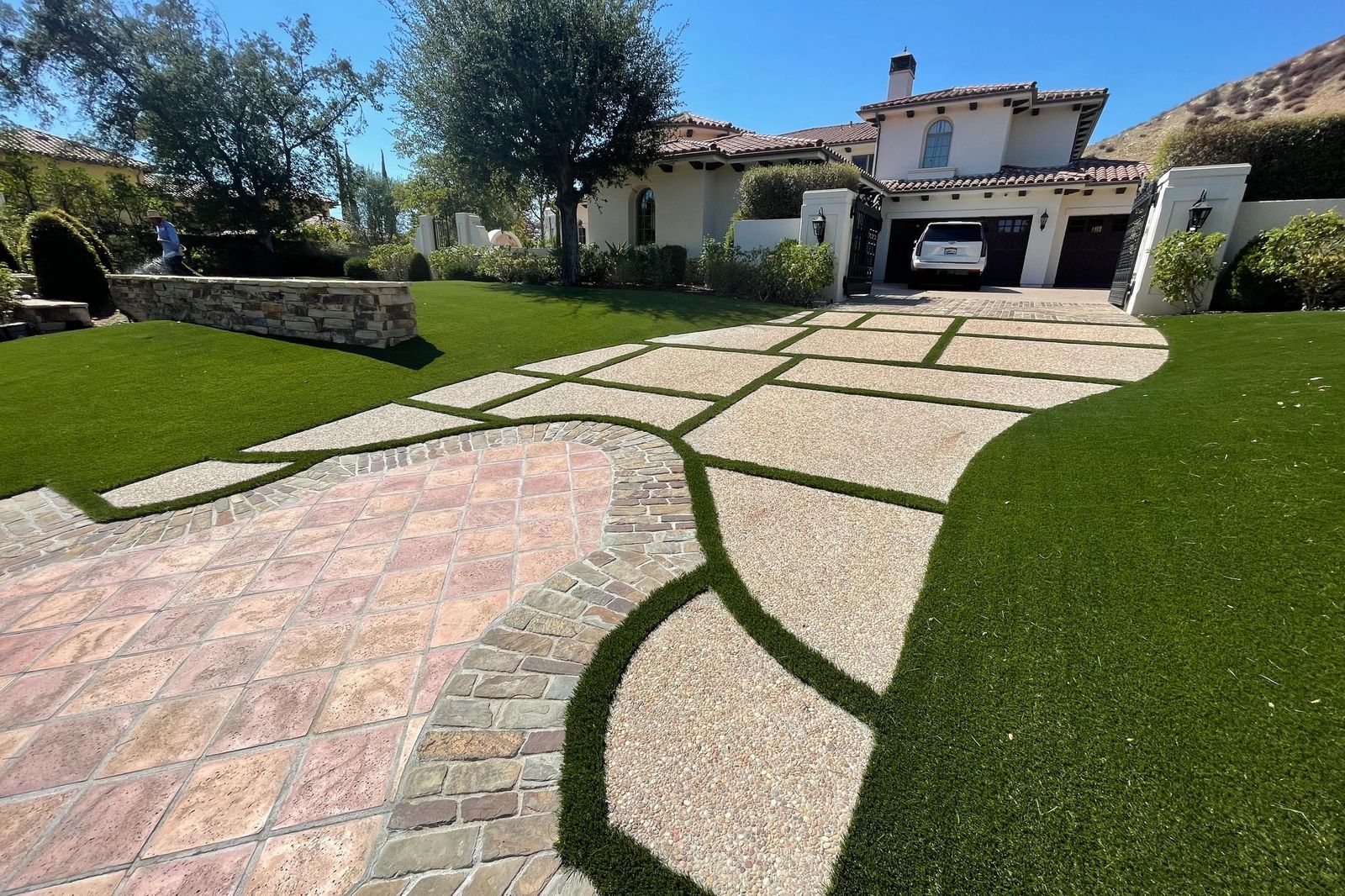
Lists of artificial grass pros and cons tend to miss this, because the right answer changes from one part of the same yard to the next. The strip where the kids play wants a surface. The bed under the windows, the side yard used only as a path, and the bank nobody walks on are almost always better planted. A yard with no children or dogs may need no turf at all. We install both, so we have no product to push, and plenty of yards end up with some of each.
Which uses less water, turf or drought tolerant planting?
Turf uses less while a new planting gets established, and after that the gap is smaller than most people expect. Artificial turf needs no irrigation. A new planting needs regular deep watering while its roots spread, usually through its first summers. Once settled, many drought tolerant plants get by on an occasional soak from drip, and some California natives want little or no summer water at all.
Either one makes a water-wise yard compared with a grass lawn, so water alone rarely settles the choice. The turf side has two catches. Beds around the edges still need water whether the middle is turf or not. And a mature tree that grew up drinking from lawn sprinklers can decline when that water stops, so if one stands in the lawn you intend to replace, decide how it will be watered, and ask an arborist about any tree you care about.
On the planted side, drip irrigation does the saving. It puts water at the roots instead of into the air, and grouping plants by water need, each group on its own valve, keeps the thirsty ones and the dry-loving ones off the same schedule.
Which one stays cooler through a Pasadena summer?
Planting, by a wide margin. Leaves shade the soil and release water through their pores as they grow, which cools the air right around them, and mulch keeps the ground beneath from baking. Turf has none of that. It is plastic and infill in full sun with no water moving through it, so in a Pasadena yard that takes the west sun it becomes one of the hottest surfaces on the lot by mid afternoon.
That heat matters beyond the lawn itself. A hot surface against the house radiates warmth at the walls and windows facing it, while a planted bed in the same spot shades the ground. Where turf has to go in a hot exposure, put a shade tree in a planted bed at its edge, on its own drip line, so the lawn gains afternoon shade as the tree grows. Until it does, a west facing turf lawn is a morning and evening space in July and August.
Do lawn replacement rebates cover artificial turf?
Usually not, but confirm current terms with your water provider, because programs change often. Most Southern California lawn replacement rebates favor living, climate-appropriate planting and have generally excluded artificial turf. The names confuse people: a turf replacement rebate is about replacing thirsty grass, not paying for synthetic turf. If a rebate matters to your budget, that alone can tip a borderline area toward planting. Turf can still be the right call for a play area; just budget for it without one.
Which program applies depends on who supplies your water. Pasadena Water and Power serves much of Pasadena, other areas have their own providers, and the Metropolitan Water District runs a regional program. Call the provider while the lawn is still in the ground. Some programs want to see the existing lawn before work starts, and programs often set conditions for what replaces it, so read the current terms before the design is final.
Which one costs more to put in?
The site decides more than the material does, and both start the same way, with the old lawn coming out. A turf quote is mostly ground work: excavation, a rock base compacted in layers, and drainage, with the turf and infill on top. A planting quote is mostly soil preparation, drip lines, plants, and mulch, plus whatever paths and borders the design needs. Existing sprinkler valves can often feed the new drip once a filter and pressure regulator are added, which keeps that switch simpler.
Planting has a lever turf lacks: plant size. Larger plants cost more and look finished sooner, while smaller ones cost less, and many natives planted small establish quickly and catch up. Paths pull the other way. A planted area needs a way through it, in stepping stones, gravel, or pavers, while turf is its own walking surface. In a yard people cross all day, those paths belong in the planting budget from the start.
When you compare quotes, check that both price the same area, the same lawn removal, and the same edging, so the difference you see is the material and not the scope.
What upkeep does each one need?
Turf needs less attention week to week, and planting needs more at first, then less once it fills in. Neither is maintenance free. Leaves, blossoms, and seed pods do not break down on plastic, so turf under a sycamore or a jacaranda gets blown or raked often, and weeds root in the debris that collects along its edges.
Under the same tree, a planted bed keeps its leaf fall as mulch, one reason planting usually suits the ground beneath big trees. Planting chores follow the seasons, and the heaviest work comes early, while plants establish and weeds still have open ground to move into.
- Walk the drip lines in spring, looking for clogged emitters, leaks, and tubing a rake has pulled loose.
- Change the controller schedule as the seasons turn, and cut it back as plants establish.
- Pull weeds until plants and mulch cover the ground, after which weeding drops off.
- Cut back salvias and grasses at the time the nursery recommends, so they regrow fresh.
- Top up mulch as it breaks down, keeping it pulled back from plant stems.
How long does each one last?
On a properly built base, a good turf product typically lasts 15 to 20 years, and then the surface has to be replaced. The old turf is pulled up and hauled away, and if the base was built right, new turf can often go down on it after a check and some repair. That is a real project, and it belongs in any long term comparison.
A planting has no end date in the same sense. Long lived shrubs such as manzanita settle in and keep filling out for years. Shorter lived plants, including many ceanothus and lavenders, decline after several years and get replaced, which costs a plant, not a project. A planted yard looks thinnest the week it goes in, while turf never looks better than on install day.
What grows well in Pasadena heat and clay?
Plants from California and other dry summer climates, matched to the sun and set up for clay. California native plants such as manzanita, ceanothus, deer grass, and yarrow are adapted to long dry summers, and Mediterranean plants like lavender and rosemary take the same heat. Good drought tolerant landscaping in Pasadena starts with the soil, though. Clay holds water around roots through a wet winter, and many of these plants die from too much water, not too little.
We loosen compacted clay before planting, but we do not try to turn it into garden loam. We choose plants that tolerate it, raise the ones that do not onto mounds or into raised planters, and keep drip emitters away from the trunks of plants that resent summer water. Ask the nursery how each plant handles clay and summer irrigation before it goes on the plan. In San Gabriel Valley landscaping, that question heads off the most common way these plants die.
- Salvias bloom for months in full sun, draw hummingbirds, and many handle clay if kept on the dry side.
- Manzanita wants sharp drainage, so on clay it goes on a mound or a slope, never in a low spot.
- Ceanothus brings blue spring flowers but can rot with summer water once established.
- Deer grass forms a tough, fountain shaped clump that takes heat and clay with little care.
- Yarrow spreads into a soft groundcover that takes light foot traffic and can be mowed.
- Lavender and rosemary want full sun and fast drainage, and do best on little water once settled.
Why do mixed yards so often work best?
Because each material goes only where it is good at something. Turf covers the area that gets played on, sized to that use and no bigger: measure what the play actually needs, a rectangle for catch or room for a table and chairs, and stop there. Planting takes the edges, the ground under trees, and the beds along the house, so the yard does not carry turf's heat and wear across every square foot.
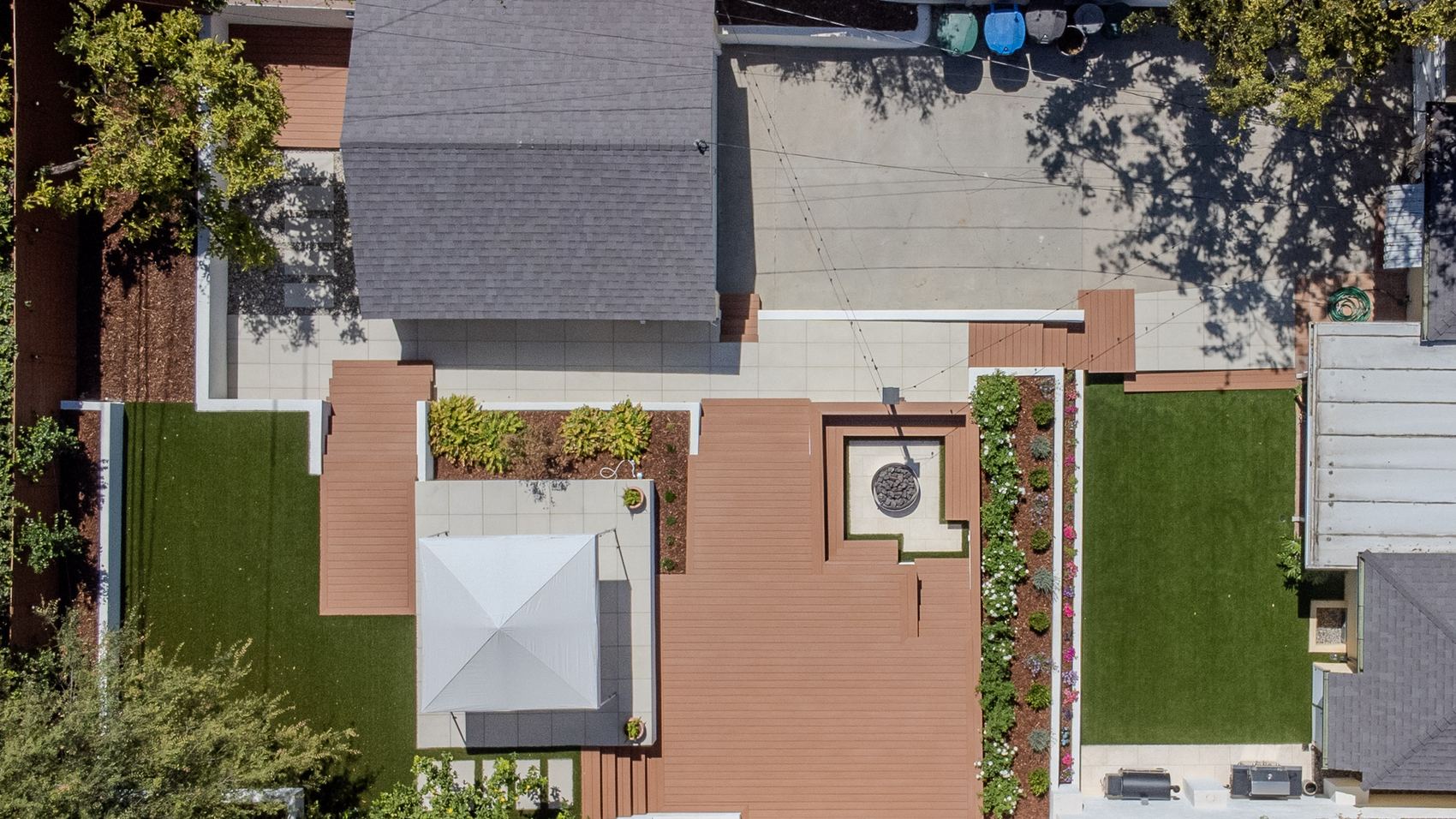
The Menlo Backyard shows how that plays out. That lot was a slope, now three flat terraces, and artificial turf covers two of them, with stepping stones set flush, letting a path cross the lawn without breaking it up. The same yard has raised planters, drought tolerant planting, and decorative rock mulch. The turf makes two levels usable, and the planting keeps the yard from reading as one sheet of green.
At the boundary between turf and beds, we build a hard edge. A raised planter wall or a steel edging strip keeps bed soil and mulch from washing onto the turf in a heavy rain, and holds drip water in the bed, where the roots are.
The one thing to remember
Decide patch by patch, by how each part of the yard gets used. Put turf only where people and pets actually play, and plant the rest for your sun and your clay, with drip zoned by water need. Built that way, the yard stays cooler, uses little water, and keeps improving in the places turf would only wear.
Follow-up questionsAnswered.
Is artificial turf bad for the environment?
It is a trade, not a verdict. Among lawn replacement options, turf is the one that gives you a usable lawn with no irrigation, mowing, or fertilizer. Against that, it is plastic, it heats the ground, it offers insects and birds nothing, and recycling for worn turf is limited, so ask where yours would go. A planted yard wins on most of those counts, in exchange for more water early and more hands-on care.
Do drought tolerant yards look dead in summer?
Some do, by design. Many California natives slow down or go dormant in late summer, the way the foothills turn gold, and a yard built only from them can look tired by August. Evergreen shrubs such as manzanita, ceanothus, rosemary, and lavender keep their leaves through the heat, so build the yard's structure from them and let the summer dormant plants fill the spaces between.
Can an HOA stop me from replacing my lawn?
Not outright. California law limits an HOA's ability to ban water-efficient landscaping, including artificial turf, though the association can still set reasonable design standards. In practice, you can usually replace the lawn but may need the plan, the plant list, or the turf product approved first. Get the written standards before the design is final, and submit the plan the way the association's rules ask.
How long do new plantings take to fill in?
Most look thin through their first growing season and close the gaps over the next few as roots establish. We space plants for their mature size, not for how the bed looks on day one, because crowding them means thinning a packed bed a few years later. Mulch covers the bare ground in the meantime, and a quick groundcover such as yarrow can fill gaps between slower shrubs while they grow.
Should the front yard be planting and the back yard turf?
Often, yes, because that split follows how many households use the two yards. The front is seen from the street and crossed on a path, which a low water front yard of shrubs, grasses, and mulch handles well, while the back is where children and dogs play. In San Marino, where design review is among the most demanding in the San Gabriel Valley, check with the city before changing a front yard the street can see.
Should I use rock, mulch, or decomposed granite between plants?
Use each where it fits. Shredded bark or wood mulch keeps soil cool and moist and breaks down into it, which suits most planting beds. Decorative rock lasts and suits dry, sunny spots, but it holds heat and adds nothing to the soil. Decomposed granite makes a firm path or sitting area rather than a bed cover. Rock also gathers leaves and dust, so it needs blowing to stay tidy.
Related services
Free estimatesWant a straight answer on your project?
About the author
Michael Ward, owner of MKW Homes Inc
Michael is a Liverpool-trained builder with over 20 years in the trade, running one four-person crew across Pasadena and the San Gabriel Valley. California license CSLB #1074934, verifiable on the CSLB website. He writes these guides from what the work actually involves.