Pool surrounds
What is the best pool deck material for hot summers?
By Michael Ward, owner of MKW Homes Inc
By Michael Ward, owner of MKW Homes Inc · Updated September 2026
The short answer
For bare feet in a Pasadena summer, the best pool deck material is usually a light-colored, porous stone such as tumbled travertine. Light concrete pavers come close, while dark, dense stone and dark stamped concrete turn painful by midafternoon. Heat is only half the choice. A good deck also grips when wet, sheds water away from the pool, meets the coping in one clean line, and rides out the swelling and shrinking of our clay soil.
Which pool deck materials stay coolest underfoot?
Light, porous stone stays coolest, with tumbled travertine usually in front and light-colored concrete pavers close behind. Color does most of the work. A pale surface reflects much of the afternoon sun, while a dark one absorbs it and heats up fast. Density comes next: dense stone and concrete soak up heat all day, pass it into a bare foot quickly, and give it back well after sunset.
Porosity helps at the margins. A porous stone holds a splash in its surface a little longer, and evaporation cools it while the water lasts. That effect is small next to color, which is why a dark travertine can still burn and a light concrete paver can stay tolerable. Exposure matters as well: a south or west facing deck with no shade takes the full force of a Pasadena afternoon.
For your own yard, the coolest pool deck material is the one you can stand on barefoot on a hot August afternoon, so test it. Ask for samples of your finalists, set them side by side in full sun, and step on each one after a few hours. Shade changes the result more than any finish, so a deck in afternoon shade has more good options than one in open sun.
How do travertine, pavers, porcelain, and concrete compare?
Any of them can make a good deck on a good base; they differ in heat, grip, upkeep, and what a repair looks like. A pool asks different things of a surface than a driveway does: bare feet instead of tires, splash every day, and chlorine or salt drying on it all summer. Framing the choice as pool pavers versus concrete, the way a driveway gets framed, leaves out travertine and porcelain, and both belong on the list.
For a family pool in full sun, we lean toward light travertine or a light paver. In a shaded yard the heat argument weakens, and upkeep and budget can lead the decision instead.
- Tumbled travertine usually runs coolest, but it is soft and porous, needs a penetrating sealer, and etches under acid cleaners.
- Concrete pavers stay comfortable in light colors, and a cracked one swaps out alone, but their color can fade in strong sun.
- Porcelain pavers need no sealing and shrug off stains, but they are dense, so pick a light color and a textured outdoor finish.
- Broom-finished concrete costs the least and grips well, but gray concrete runs warm and every crack stays visible.
- A cool deck coating over sound concrete runs cooler than bare gray, but it needs recoating and shows the slab's cracks.
- Dark slate, dark stamped concrete, and dark composite boards can look sharp, but in full sun they get too hot for bare feet.
Why does slip resistance matter as much as heat?
Because a pool deck is wet exactly when people move fastest on it. Children run from the back door to the water, swimmers haul themselves out onto the coping, and everyone crosses with wet soles. A slip-resistant pool deck needs a texture that grips a wet foot without scraping it, which argues against polished stone and glazed tile at one end and coarse exposed aggregate at the other.
Sealer is where a good surface can go wrong. A glossy, film-forming sealer can turn textured stone or stamped concrete slick the first time it gets wet. On pool decks we prefer penetrating sealers, which soak in and leave the texture alone. Where a surface truly needs a film-forming sealer, we look for one with an anti-slip additive. Ask which sealer an installer plans to use, and whether the maker rates the product for wet exterior use.
Standing water does the rest. Wherever a puddle sits in a shaded corner, a film of algae follows, and that film is slicker than any finish. Steady slope toward the drains, with the grates kept clear of leaves, matters as much as the texture you choose.
How should the deck meet the pool coping?
The deck should meet the coping at one steady height, with a flexible joint between them. The coping sits on the bond beam, the thickened top of the pool wall, and the pool shell barely moves. The deck rests on soil that swells and shrinks with the seasons. Mortar the two together and the ground eventually cracks that joint or lifts coping stones loose, which is a far bigger repair than resealing a joint.
On our jobs the deck surface finishes flush with the back edge of the pool coping, never above it, so splash and rain head outward instead of over the edge, and there is no lip to catch a toe. The joint gets a flexible sealant made for pool decks. Sun and chlorine wear that sealant out over the years, so plan on cutting it out and renewing it as routine upkeep.
Check the coping itself before the new deck goes in. Loose stones, cracked mortar beneath them, or a hollow sound when tapped mean it should be reset or replaced in the same job, since doing it later disturbs the new deck's edge. We build coping and decking. The plaster, the equipment, and the pool itself are a pool contractor's work, so trouble in the shell is a separate call.
Which pool deck holds up best on clay soil?
Pavers or stone on a deep, compacted base handle clay best, because a field of separate units can flex slightly, and any piece that settles can be lifted and reset. A poured slab is one rigid piece. When the clay under it swells after winter storms and dries out through the summer, the slab is likely to crack, and control joints can only steer the crack into a straight line. Much of the San Gabriel Valley sits on this kind of clay, so a pool surround here is often built on ground that moves.
The base matters more than the surface. Under pavers and stone we remove the loose native soil, replace it with crushed rock compacted in thin lifts, and screed a sand bed on top, so the deck rides on a stable layer instead of directly on the clay. Keeping water out of that clay matters just as much, because sprinklers that soak the ground along a deck edge can make that edge heave.
Then give the water a legal exit. The deck should fall gently away from the pool toward a slot drain or area drain, and that line has to discharge where water is allowed to go: generally not into the sanitary sewer and not onto a neighbor's property, and a curb outlet typically needs public works approval, so confirm with your city. On the hillside Estate Pool & Grounds job, grading and drainage were most of the work.
Should you resurface or replace a cracked pool deck?
Resurface when the slab under the cracks is sound; replace the deck when the slab itself has moved. Pool deck resurfacing, whether a cool deck coating, a thin overlay, or thin pavers set on top, adds a new skin to old concrete. A skin follows whatever the slab does next, so an active crack comes back through it, and a deck that already drains toward the pool keeps doing so.
For a Pasadena deck that sits true, drains the right way, and shows only old hairline cracks, pool deck resurfacing is a sensible way to get a cooler, better looking surface without demolition. If any of the signs below apply, pool deck replacement is the better spend, because the problem lives in the base and the slope, and a new skin cannot reach either.
- One side of a crack sits higher than the other, which means the slab has moved.
- A section tilts toward the pool or the house, or puddles linger after a rinse.
- The deck edge has heaved against the coping or pulled away from it.
- The concrete sounds hollow when tapped or crumbles along its joints and edges.
- You plan lighting, gas, or new drains that would need trenches under the deck anyway.
Can pavers go over an existing concrete deck?
Often, if the slab is sound, drains the right way, and there is height to spare. Thin overlay pavers and thin travertine are made for this. They go down on a shallow bed over the old concrete, which saves demolition and keeps a base that has already had years to settle. The limit is height: every layer raises the finished surface, and several things around a pool cannot rise with it.
If the slab is cracked and shifting, pavers laid over it will shift with it. In that case we take the concrete out, rebuild the base, and start clean. Where the slab passes, these are the points we check before committing to an overlay.
- The coping stays put, so the new surface must finish flush with it, never above.
- Door thresholds stay put, so a raised deck can crowd a sill or block a door's swing.
- Stucco walls need the weep screed at least 2 inches above paving, and a thicker deck can bury it.
- Existing deck drains need their grates raised to the new surface or replaced.
- Water that seeps through the joints needs a path off the old slab.
Does a new pool deck trigger pool safety rules?
It can, and the answer comes from the building department, not the contractor. If a permit is pulled for pool work, California's pool safety law can require the pool to have current drowning prevention safety features. Whether a deck or coping job counts as pool work is a question for the City of Pasadena, or for LA County Public Works if you are in Altadena, and it belongs at the start of design rather than at final inspection.
Plan for the barrier either way. Deck work can move a gate, a run of fence, or the path from the back door, and the pool should stay closed off from young children the whole time the yard is torn up, which can mean temporary fencing. If the new layout changes where the barrier runs, settle the new line on paper before the old one comes down.
The one thing to remember
Pick the deck you could stand on barefoot at three in the afternoon in August, which usually means light, porous, and textured rather than dark, dense, and glossy. Then give the unseen work equal weight: a compacted base, a steady fall away from the water, and a flexible joint at the coping. The coolest stone in the yard still fails without them.
Follow-up questionsAnswered.
Is travertine slippery when wet?
Tumbled or brushed travertine grips well when wet, which is a big reason it is so common around pools. Polished travertine is slick and belongs indoors. Honed travertine is smoother than tumbled, so ask the supplier how it performs wet before using it where swimmers climb out. A glossy sealer can undo any finish, so a travertine pool deck should get a penetrating sealer instead.
Is a white pool deck too bright?
It can be. A white or very pale deck stays cooler underfoot, but in full afternoon sun it throws glare that makes people squint, and it bounces heat onto nearby walls and windows. Cream, sand, and light gray tones usually give up little comfort underfoot and are much easier on the eyes. Judge samples outside in bright sun, not under showroom lights.
Can you replace the deck without draining the pool?
Yes. A deck replacement works around a full pool, and we cover the water during demolition so dust and chips stay out of it. The shell is not touched. If the coping is being replaced as well, the water level may need to come down below the work for a while, and how far is a question for whoever services your pool.
Is salt water hard on a pool deck?
It can be, especially on soft, porous stone and on concrete. Salt water splashed onto the deck dries inside the pores, and as the salt crystallizes it can flake the surface over the years. Rinsing the deck with fresh water, keeping a penetrating sealer in good shape, and choosing a denser stone or porcelain all help. For a salt pool, ask the supplier whether the product suits it.
Can artificial turf go right up to the pool?
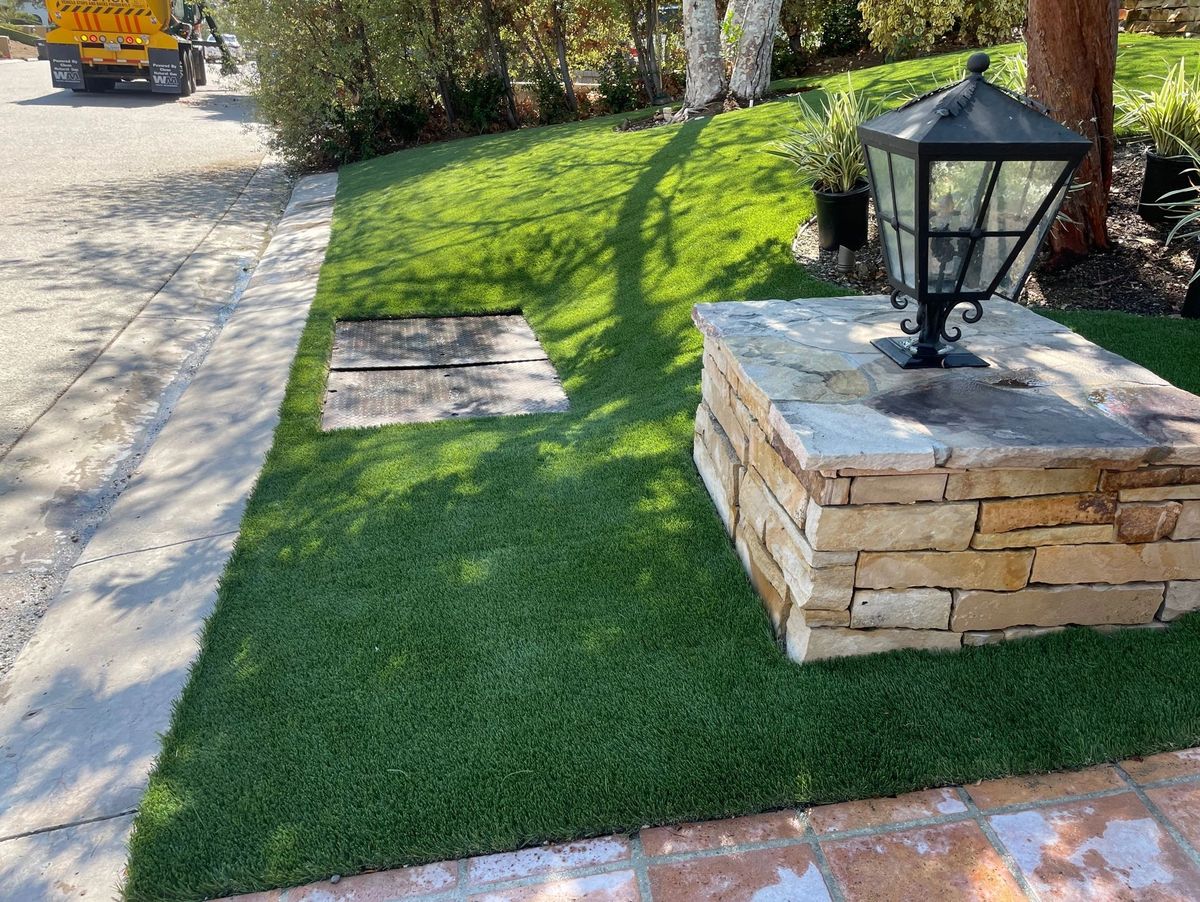
Yes, with a few cautions. On the Estate Pool & Grounds project, the turf and hardscape were both set level with the coping, and the turf sits on a compacted, drained base. Turf gets hot in full sun, infill kicked into the water ends up in the skimmer, and splash soaks through turf into the base, so the base under it must be built to carry that water off.
When is the best time of year to replace a pool deck?
Fall is often the best window in Pasadena: swim season is over, the ground is dry, and the winter rain has not arrived yet. Heavy winter storms can stall base work and pours, and sealers need dry weather to cure. Spring works too, but many homeowners want the deck back by summer, so start the planning in winter if June matters to you.
Related services
Free estimatesWant a straight answer on your project?
About the author
Michael Ward, owner of MKW Homes Inc
Michael is a Liverpool-trained builder with over 20 years in the trade, running one four-person crew across Pasadena and the San Gabriel Valley. California license CSLB #1074934, verifiable on the CSLB website. He writes these guides from what the work actually involves.